Honey Bee Farmhouse Tumbler Graphics Review for Real Projects
An experienced designer friend recently asked me to help style a product launch for a small honey-infused skincare line. The client wanted a cohesive visual identity that felt warm, rustic, and approachable — the kind of handmade brand that sells at farmers markets and through an Etsy shop. As I started pulling together mood boards, packaging concepts, and social media graphics, I found myself reaching for a creative asset that could anchor the entire look: the Honey Bee Farmhouse Tumbler design. I want to share my honest review of this graphic design asset from the perspective of someone who uses these resources for real client work, not just personal crafting.
A First Look at the Visual Mood
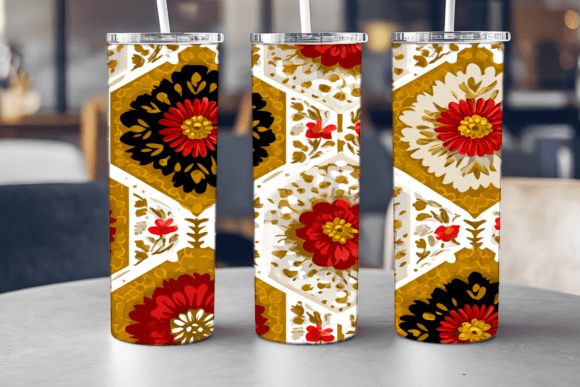
The Honey Bee Farmhouse Tumbler immediately communicates a specific atmosphere. The design leans into a rustic, countryside aesthetic with honeycomb motifs, bees, and soft floral or farmhouse-style details. The palette feels warm and inviting — think golden ambers, creamy whites, soft greens, and gentle earth tones. This is not a stark, minimalist asset. It is a decorative, illustrative piece that brings a story to life. As a graphic design asset, it succeeds in establishing an emotional tone before you even place it into a layout. For my client’s handmade brand, this mood was exactly what we needed to signal artisanal quality and natural ingredients. The visual hierarchy is clear: the bee and honeycomb elements draw the eye, while the farmhouse influences ground it in a lifestyle context that feels genuine, not forced.
Where This Design Shines in Commercial Projects
In my testing, the Honey Bee Farmhouse Tumbler performs exceptionally well in several specific use cases. On product packaging — especially for honey, beeswax candles, lotions, or baked goods — the design creates an immediate connection to the handmade business story. It also works beautifully as a central element in product mockups for print-on-demand items like tote bags, aprons, and mugs. The 300 DPI PNG format ensures clean output for sublimation design on tumblers, which is its primary application. I also found it effective for social media graphics: think Instagram posts promoting a seasonal fall market or Pinterest pins for a farmhouse-themed kitchen collection. The design adds visual warmth to Canva templates and can be scaled into marketing visuals for local events. For Cricut projects like stickers, labels, or gift tags, the detail holds up well because the elements are distinct rather than muddy. If you are building a design bundle for a craft fair or a small business branding kit, this asset can serve as the hero graphic that ties everything together.
Thoughtful Placement for Logo and Brand Identity Work
While the Honey Bee Farmhouse Tumbler is not a logo itself, it can support logo design and brand identity development. I used a cropped version of the honeycomb detail as a watermark pattern on product photography and as a subtle background for website headers. The illustration style feels hand-drawn and authentic, which works well for creative brands that want to avoid a corporate feel. However, I advise against using it as a primary logo mark for a business that needs strict scalability and simplicity. For brand identity work, treat this as a decorative accent or a supporting visual element — perfect for packaging design, letterhead, or stamp-style icons on labels. The commercial design value here is high if you use it thoughtfully within a larger system. For my client, I paired it with a simple sans serif font for the logo lockup and used the full ornamental version on product mockups and social media graphics.
Performance in Print and Digital Layouts
Testing the Honey Bee Farmhouse Tumbler across different formats revealed where it truly excels and where designers need caution. At large sizes — such as a poster, a hero image on a website, or a full product wrap — the details remain crisp and the composition feels balanced. The 300 DPI resolution is professional-grade for sublimation and digital printing on Sawgrass, Epson, and similar printers. I ran a test print on a 20oz skinny tumbler and the color registration was clean. For editorial design, like a recipe card or a blog post header, the asset adds a charming focal point that draws readers in. It also works well in digital ads for boutique brands, especially when paired with soft typography and organic shapes. However, I recommend testing it at smaller sizes before committing. When scaled down for a business card, a small sticker, or a favicon, the fine details lose legibility. The bee wings and honeycomb lines can become visually noisy below about 1.5 inches. For tiny applications, consider using a simplified version or a single element from the design rather than the full composition.
Contrast, Backgrounds, and Visual Hierarchy Considerations
One of the first checks I run on any graphic design asset is how it behaves on light versus dark backgrounds. The Honey Bee Farmhouse Tumbler is predominantly medium contrast, with light and warm mid-tone values. On a white or cream background, the design feels airy and approachable — perfect for a farmhouse brand. On a dark background, the lighter areas pop, but some of the honeycomb pattern loses definition if not supported by a drop shadow or outline. I recommend using it on light or pastel backgrounds for maximum readability. The design also works well as a layered element in a digital product like a Canva template, where you can adjust opacity to use it as a faded backdrop. The PNG transparency is clean, with no rough edges, so it integrates smoothly into composite layouts. For projects that require strong visual hierarchy, place this asset as a secondary or tertiary element — it is decorative and charming, but not a primary information carrier.
Practical Designer Notes Before You Buy
Before using the Honey Bee Farmhouse Tumbler for a client project, I recommend a few checks. First, test it in black and white to see if the contrast holds without color. I found that the design still reads clearly, though the honeycomb loses some dimension. Second, preview the PNG at both its native size and scaled down to ensure the file handles resizing cleanly. Since this is a 300 DPI PNG, it is raster-based, so extreme enlargement may reveal pixelation depending on your output size. For vector flexibility, you might wish for an SVG version — but for tumbler wraps and print-on-demand at standard sizes, the PNG is adequate. Inspect the transparency layer in your editing software: I opened it in Photoshop and Procreate and the alpha channel was clean with no halos. If you plan to use this for t-shirt design or fabric printing, confirm that your production partner accepts PNG files at this resolution. Also compare it with different font styles: it pairs beautifully with script and handwritten fonts for a rustic feel, but it also holds its own next to a clean sans serif if you want a modern farmhouse contrast. Serif fonts can work, but test for legibility if the text is small.
Commercial Licensing and Real Client Use
The product description explicitly states 🛒 INSTANT DOWNLOAD — COMMERCIAL USE WELCOME 🛒 and adds that it is ready for 20oz skinny tumblers, printing clean on Sawgrass, Epson, and similar systems. This is a critical detail for designers working with print-on-demand, Etsy products, or handmade businesses. Before using any graphic design asset commercially, I always confirm the terms: does the license cover physical products for sale? Does it allow digital templates? Can you use it in a brand identity package? In this case, commercial use is welcome, which means you can incorporate the Honey Bee Farmhouse Tumbler into client projects, product packaging, and marketing visuals without worrying about licensing violations. That peace of mind is essential when you are building a reputation as a professional designer. I always advise saving the license file with your project files for future reference.
Overall Impression for Design Professionals
The Honey Bee Farmhouse Tumbler is a well-crafted graphic design asset that fills a specific niche — rustic, farmhouse-inspired commercial work for small businesses, handmade brands, and seasonal campaigns. It is not a one-size-fits-all solution, but for the right project, it adds tremendous emotional appeal and visual trust. If your client sells artisanal honey, farmhouse decor, organic skincare, baked goods, or handmade gifts, this design can elevate their entire visual presence. For social media managers, it provides ready-made content for Pinterest pins, Instagram posts, and blog graphics. For Cricut users and digital sellers, it is a reliable sublimation design that prints without fuss. The asset also supports print-on-demand entrepreneurs who need consistent, attractive designs for tumbler wraps, mugs, and apparel. Just be mindful of scale, avoid placing it in overly complex layouts, and always preview it on your actual product mockup before finalizing. With those considerations in mind, the Honey Bee Farmhouse Tumbler earns a solid recommendation from me for professional design work.